大火过后,急于维稳的港府和未被“驯服”的香港公民社会
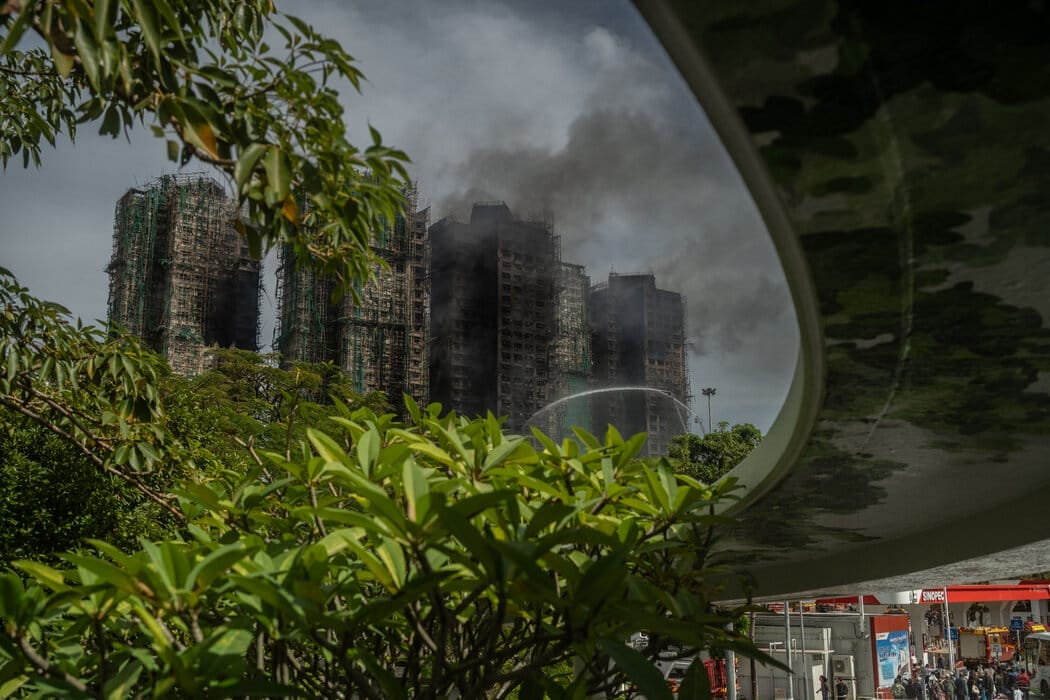
Residents of Hong Kong had a perfectly natural response after a devastating fire in an apartment complex killed at least 159 people last week: They mourned the tragedy, which left thousands homeless, and tried to make sense of what had happened. They demanded an independent investigation and official accountability.
上周,香港一栋公寓楼发生毁灭性火灾,造成至少159人死亡,香港居民的反应非常自然:他们哀悼这场导致数千人无家可归的悲剧,并试图弄清楚事故原因。他们要求进行独立调查并对官员问责。
What they got from their leaders were smears and intimidation.
他们从领导层那里得到的是污蔑和恐吓。
In Hong Kong, a city that prided itself on civic engagement and the rule of law, public grief and anger have become politically dangerous. The authorities are now determined to ensure that the fire does not result in anything resembling collective action.
在香港这个以公民参与和法治为荣的城市,公众的悲痛和愤怒已变成了政治上的危险。当局现在决心确保火灾不会引发任何类似集体行动的事件。
The police detained and then released a university student who handed out fliers calling for an independent inquiry, according to local news reports. And a news conference planned by lawyers, social workers and policy experts was canceled after an organizer was summoned by the police.
据当地媒体报道,一名分发呼吁独立调查传单的大学生遭警方拘留后获释。一场由律师、社会工作者和政策专家筹划的新闻发布会在组织者被警方传唤后被取消。
A national security official toured the charred Wang Fuk Court apartment complex, where, as a government-affiliated newspaper claimed, in a clear reference to 2019 anti-government protests in Hong Kong, “black-clad rioters” and pro-democracy supporters attempted to “hijack” relief efforts for anti-government purposes. Separately, Beijing’s national security branch in the city warned against “using the disaster to cause chaos in Hong Kong.”
一名国家安全官员视察了烧焦的宏福苑,一家有政府背景的报纸报道称(该报道明显影射2019年的香港反政府示威),“黑衣暴徒“和民主派支持者企图将那里的救援行动“挟持“成反政府用途。另有报道称,中国国家安全局在香港的机构警告“不得借灾难之机制造香港混乱”。
It was an extraordinary message to send the public when the city was still in shock, when dozens of bodies were yet to be identified. Yet the logic behind it is familiar.
当这座城市还处于震惊之中、数十具遗体尚未辨认时,向公众发出这样的信息是不寻常的。但其背后的逻辑是熟悉的。
Beijing imposed a national security system on Hong Kong after the protests in 2019. It has effectively criminalized anything that officials consider counter to the interests of China or Hong Kong. As shown in the past week, the authorities in Hong Kong have internalized a crisis-management playbook that the Chinese Communist Party has relied on since the Tiananmen massacre in 1989.
2019年抗议活动后,北京在香港建起了一个国家安全体制。该体制实质上将官员认为有损中国或香港利益的任何行为都定为犯罪。正如过去一周所示,香港当局已将中共自1989年天安门屠杀以来沿用的危机管理规范内化为自己的行动准则。
That playbook is built on the assumption that gatherings triggered by a tragedy might mutate into collective action. Not coincidentally, the democracy demonstrations in Tiananmen began with public mourning.
这种规范建立在这样的假设之上:由悲剧引发的集会可能演变成集体行动。并非巧合的是,天安门的民主示威正是始于公众哀悼。
 这场席卷香港住宅大楼的火灾是该市自1948年以来最致命的火灾,造成至少159人丧生。
For more than three decades, the party has treated spontaneous civic activity after disasters as a potential political threat. It has poured tremendous resources into constructing a vast stability-maintenance apparatus designed around a consistent sequence: Tightly control the narrative, strike early at anyone who speaks out and choose overreaction over caution. For Beijing, disaster is never merely disaster. It’s a potential crisis, a spark that must be extinguished before it becomes a firestorm.
30多年来,中共一直把灾后自发的公民活动视为潜在的政治威胁。它投入了巨大的资源,构建了一个庞大的维稳机制,其运作遵循固定模式:严格控制叙事,及早打击任何发声的人,宁可过度反应也不愿谨慎行事。对北京来说,灾难绝不仅仅是灾难,而是潜在的危机,必须在火苗蔓延成燎原之势前将其扑灭。
After the 2008 Sichuan earthquake killed thousands of schoolchildren, parents and activists who questioned why school buildings had collapsed while government offices remained intact were detained, surveilled or silenced. Independent investigations by lawyers, volunteers and intellectuals such as the artist Ai Weiwei were suppressed.
2008年四川地震造成数千名学生死亡后,质疑校舍倒塌而政府办公楼完好无损的家长和活动人士被拘留、监视或噤声。律师、志愿者及艺术家艾未未等知识分子发起的独立调查均遭压制。
The message was clear: Private grief was allowed; organized grief was not.
这透露出的态度很明确:允许个人哀悼,有组织的哀悼则不然。
Chinese officials have flashed that reflex time and again: a high-speed rail crash in 2022, the sinking of a cruise ship in 2015, a port explosion in Tianjin that killed 173 people. In 2022, the government censored outpourings of grief online after the crash of a bus full of people being transferred to a Covid-19 quarantine facility, and again after a deadly fire in an apartment during a lockdown. In each case, attempts by families, citizens or journalists to seek truth, mourn publicly or demand accountability were treated as political dangers. Journalists were threatened, relatives were pressured to stay silent and activists were jailed.
中国官员一次又一次地展现这种条件反射:2022年的高铁事故、2015年的邮轮沉没、导致173人死亡的天津港口爆炸。2022年,一辆满载新冠隔离人员的大巴车祸后,政府审查了网上表达哀悼的言论,在封锁期间,一所公寓发生致命火灾后,政府又审查了网上表达悲伤的言论。每一次,家属、公民或记者寻求真相、公开哀悼或要求问责的企图都被视为政治危险。记者受到威胁,亲属被迫保持沉默,活动人士被关进监狱。
“The lesson the party drew from Tiananmen is: You cannot wait for events to escalate,” said Minxin Pei, a political scientist at Claremont McKenna College. “Problems must be crushed at the earliest stage.”
克莱蒙特·麦肯纳学院政治学家裴敏欣指出:“中共从天安门事件汲取的教训是:绝不能坐视事态升级,必须在萌芽阶段就予以扼杀。”
Disasters, he explained, pose a unique threat to authoritarian governments because they solve the two classic obstacles to collective action: motivation and coordination. People are already angry, and they know where to gather. That is why the party focuses so intensely on the first 48 to 72 hours after a tragedy, when emotions are raw and solidarity is easiest to form. The goal is not simply to respond to the crisis but to pre-empt the possibility of collective expression.
他解释说,灾难对威权政府构成了独特的威胁,因为它们消除了集体行动的两个典型障碍:动机和协调。民众本就很愤怒,而且知道去哪里聚集。正因如此,党格外重视悲剧发生后的48至72小时,当时情绪最激动,团结最容易形成。目标不仅仅是对危机作出反应,而是要先发制人,防止出现集体表达的可能性。
The Hong Kong government’s response to the fire has followed this script with precision. The detention of the university student, the official “warning” visit to the site and the ominous national security statement happened shortly after the fire was put out. The student’s detention can be interpreted as striking at anyone who stands out.
香港政府对火灾的反应精确地遵循了这一脚本。在火灾被扑灭后不久被拘留的那名大学生、那名官员前往现场进行的“警告”,以及那份不祥的国家安全声明。拘留学生之举可被解读为任何人只要冒头就会遭到打击。
The fire was the first major disaster in Hong Kong since the National Security Law was introduced in 2020. The tragedy acted as a stress test. How much civic life remained? How would the public respond? How aggressively would the government clamp down?
这场火灾是自2020年“国家安全法”实施以来香港发生的第一起重大灾难。这场悲剧起到了压力测试的作用。公民生活还保留了多少?公众会作何反应?政府的镇压力度会有多大?
The fire exposed two Hong Kongs that are uneasily coexisting: an official Hong Kong that has fully absorbed Beijing’s discipline, and a determined but quieter Hong Kong that still thinks and acts like a civic community.
这场大火暴露了两个在不安中共存的香港:一个是完全接受北京纪律的官方香港,另一个是坚定但更安静的香港,它仍然像一个公民社区那样思考和行动。
 志愿者们在大埔整理捐赠的衣物和食物。
Five years under the National Security Law have transformed the territory in ways that the tragedy made impossible to ignore. Some residents believe the catastrophe might have been prevented under the more open and independent system that existed before. Today, even those who speak strictly in their professional capacity do so under the shadow of political risk. People measure their words, anxious about crossing an invisible red line.
在“国安法”实施的五年里,这片土地发生了翻天覆地的变化,而这场悲剧让这种变化无法被忽视。一些居民认为,若维持此前更开放独立的制度,这场灾难本可避免。今天,即使是那些严格在职业范畴内发言的人士也被笼罩在政治风险的阴影下。人们衡量自己的用词,担心越过一条看不见的红线。
The Hong Kong public demonstrated that despite years of sweeping arrests, the dismantling of civil groups and the transformation of the city’s political institutions, the city’s civic instinct has not been stamped out. People recognize one another as members of a community, capable of empathy, self-organization and insistence on basic accountability.
香港公众证明,尽管多年来经历了大规模逮捕、民间团体被解散、政治体制被改造,但香港的公民本能并没有被扑灭。人们彼此视为一个共同体的成员,有同理心、自我组织和坚持基本问责的能力。
Thousands of people queued for hours to lay flowers at the complex. Volunteers delivered supplies, raised funds and assembled resources for the displaced. Journalists and citizens documented not only human stories but also the government’s response. Experts offered assessments of possible causes, gaps in oversight and policy failures.
成千上万的人排队数小时在大楼前献花。志愿者为流离失所者运送物资、筹集资金和集结资源。记者和公民不仅记录人的故事,也记录政府的反应。专家们对可能的原因、监管漏洞和政策失败进行评估。
None of this resembled the “anti-China, anti-Hong Kong” conspiracy that the authorities claimed was lurking in the shadows. It looked instead like a community doing what communities everywhere do in moments of crisis: grieve, help out and insist that the dead be honored and the living protected.
这一切都与当局所说的潜伏在暗处的“反中乱港”阴谋毫不相关。相反,它看起来像一个社区在危机时刻的本能反应:哀悼、互助,坚持让死者得到尊重,让活着的人得到保护。
The Chinese and Hong Kong governments are “terrified of anything that can generate a sense of collective identity or bring people together around the idea that this is our city, our loss, our grief,” said Chung Ching Kwong, a Hong Kong activist and senior analyst at the Inter-Parliamentary Alliance on China, an international alliance of parliamentarians.
香港活动人士、国际医院联盟对中政策跨国议会联盟高级分析师邝颂晴说,中国政府和香港政府“害怕任何可能产生集体认同感的事情,或者让人们围绕着这是我们的城市、我们的损失、我们的悲伤的想法走到一起”。
“This shows Hong Kong people have not been tamed,” she said. “We still care about Hong Kong. We still care about politics. We know there are things we cannot say or do because of safety, but when there is space and when there is a need, we will still stand up and make our own decisions, even at personal risks.”
“这表明香港人没有被驯服,”她说。“我们仍然关心香港。我们仍然关心政治。我们知道,出于安全考虑,有些事情我们不能说或不能做,但是一旦有了空间和需要,我们仍然会站起来,做出自己的决定,即使冒着个人风险。”