时报总编辑周看答读者问:如何报道特朗普、中国和世界
2025年12月3日
How does The New York Times cover the fire hose of news from the Trump administration? What journalistic principles drive that coverage? Why does The Times publish work that challenges our audience’s assumptions at a time when many people want their views validated? Where do we wish we had more reporters based? And who makes these decisions?
《纽约时报》是如何应对特朗普政府喷涌而出的新闻洪流的?驱动我们报道的新闻原则是什么?在许多人只想让自己的观点得到验证的时代,为什么《纽约时报》还要发表挑战读者既有假设的内容?我们希望在哪些地方派驻更多记者?这些决定到底由谁来做?
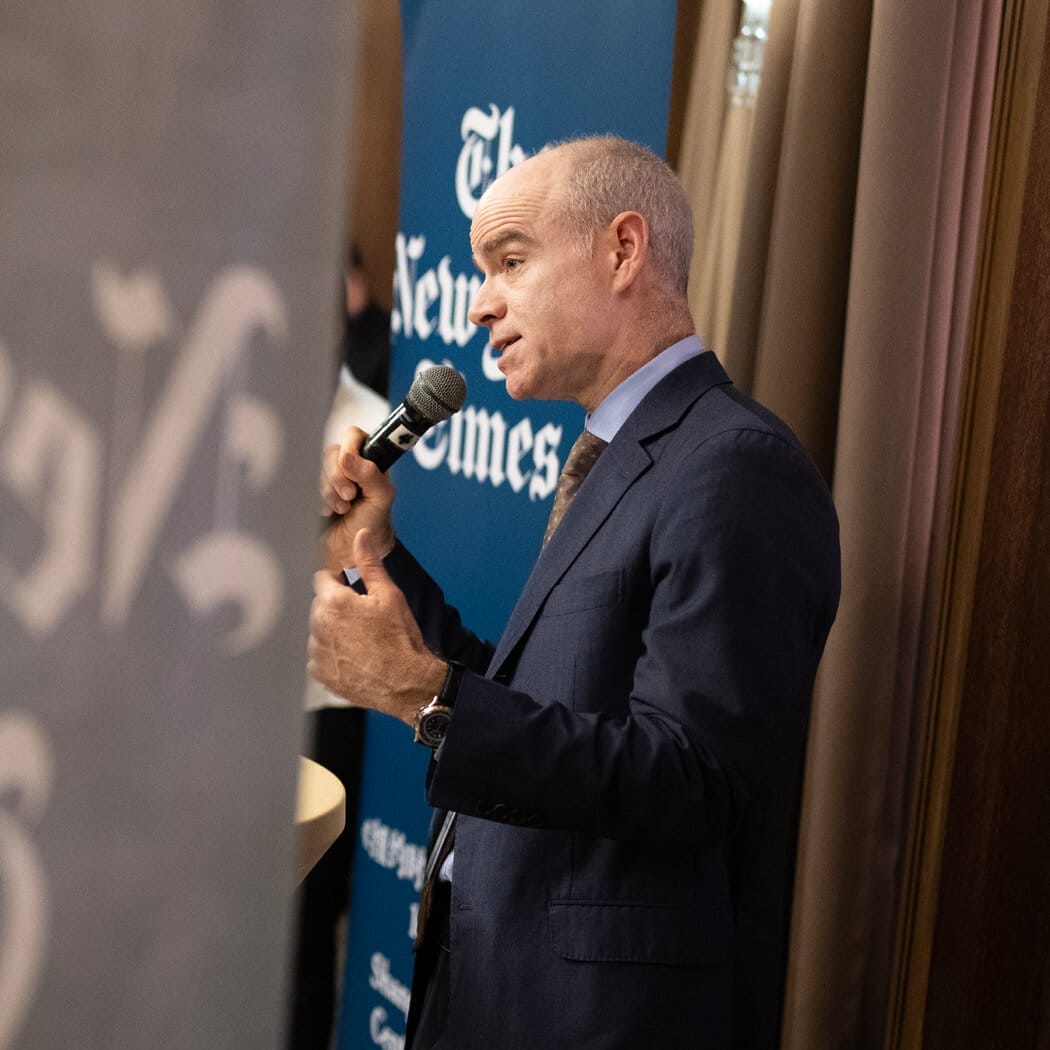
The “who” is Joe Kahn, the executive editor of The Times since June 2022, who leads our newsroom of more than 2,000 journalists. Joe has run our coverage of the turbulent American economy, the war in Ukraine, the Oct. 7 attacks, the Israel-Hamas war, President Joseph R. Biden Jr.’s exit and now a second Trump administration that is challenging the rule of law, free speech and alliances — while becoming the most consequential presidency since Ronald Reagan’s.
那个“谁”就是周看(Joe Kahn),他自2022年6月起担任《纽约时报》总编辑,领导着超过2000名记者的新闻编辑部。在他的领导下,我们报道了美国经济动荡、乌克兰战争、10月7日袭击、以色列-哈马斯战争、拜登总统退选,以及现在这个正在挑战法治、言论自由和盟友关系的第二届特朗普政府——正在成为里根以来历史影响最大的一个总统任期。
We recently asked readers for questions about Joe’s work and our coverage. I’ve synthesized them and added a few of my own, including about Joe’s observations from his recent trip to China, where he was a foreign correspondent in the mid-1990s and again in the early 2000s.
我们最近向读者征集了关于周看的工作和我们的报道的问题。我把它们归纳整理,并补充了一些我自己的问题,包括他最近中国之行的一些观察——他曾在1990年代中期和2000年代初两次担任《纽约时报》驻华记者。
Reporting on President Trump
对特朗普总统的报道

Joe, most of our reader questions were about President Trump. Some on the left like our investigative stories digging into Trump’s business dealings and want more of them. Some on the right like our stories about Trump’s effectiveness and impact in office and want more of them. Some readers want us to call the president a fascist; others want us to portray him as a patriot. There’s a desire out there for us to referee the news. How do you navigate all of that?
大多数读者提问都围绕特朗普总统。左翼读者喜欢我们深挖特朗普商业交易的调查报道,希望看到更多;右翼读者喜欢我们报道特朗普执政的有效性和影响力,也希望看到更多。有些读者希望我们直接称总统为法西斯;另一些读者希望我们把他描绘成爱国者。大家都希望我们来当“新闻裁判”。你如何应对这些相互冲突的期待?
Readers already have access to a vast amount of opinion and commentary on the internet that can validate their worldviews. That’s not our role.
读者在互联网上已经能轻易获得海量的观点和评论来验证他们的世界观。那不是我们的角色。
Our approach is to report deeply and thoroughly, surface facts and a range of perspectives on the news, help people understand the world and deliver accountability journalism on issues of public concern. Sometimes that means presenting people with information and ideas that challenge their own preconceptions and beliefs. We regularly scrutinize Trump’s questionable assertions of power and his disregard for democratic or legal norms.
我们的做法是深入、彻底地报道,挖掘事实、呈现各种视角,帮助人们理解世界,并对公共关切事项进行问责式新闻报道。有时候这意味着要给读者呈现挑战他们既有成见和信念的信息与观点。我们会反复审视特朗普对权力的可疑主张,以及他对民主规范和法律规范的漠视。
That kind of reporting is a more important service than applying labels.
这种报道比简单贴标签更有价值。
Cynthia Lewis of Arlington, Va., asked how we make decisions about covering Trump’s behavior — specifically, how much prominence to give to his “coarse treatment of perceived enemies (the other half of the country) and the vulgar, immature use of A.I.?” Other readers mentioned his attacks labeling Democrats as “seditious” and calling a reporter “piggy.”
弗吉尼亚州阿灵顿的辛西娅·刘易斯问,我们如何决定报道特朗普的行为——具体来说,用多少篇幅去报道他“对他眼中的敌人(也就是另一半美国人)的粗暴对待和对AI粗俗而幼稚的运用”?还有读者提到他给民主党人打上“叛国”的标签,称呼一位记者是“小猪”。
Trump’s manner often is the story, or a big part of the story. For example, using artificial intelligence to depict himself as a fighter pilot dropping sewage on protesters became a story about the White House’s use of A.I. and vulgar imagery. We have broken multiple major stories on his campaign of retribution against perceived enemies and his upending of norms in the judicial system.
特朗普的言行风格常常本身就是新闻,或者是新闻的重要组成部分。例如,他用人工智能把自己描绘成战斗机飞行员,向抗议者倾倒污水,这成了一篇关于白宫使用AI和低俗图像的报道。我们已经多次率先揭露他对“敌人”的报复行动,以及他对司法规范的颠覆。
I see it as our responsibility to cover the newsworthy things he says and does, put them in context, examine if he has the legal authority to pursue them and then investigate the impact and consequences of his actions.
我认为我们的责任在于报道他那些具有新闻价值的言行,将其置于具体背景下,审视他是否具备推动这些事项的法定权限,进而深入调查其行为的影响与后果。
Loraine McVey from San Anselmo, Calif., wrote: “Is The Times giving more news coverage to President Trump than any other president ever? It sure feels like it.” How do you think about our dial-setting on Trump?
来自加州圣安塞尔莫的洛兰·麦克维写道:“《纽约时报》对特朗普总统的新闻报道是否比以往任何一位总统都要多?感觉确实如此。”您如何看待我们对特朗普的报道尺度把握?
No president in my lifetime compares with him in terms of the volume of initiatives he has pursued in the first 10 months of his second term.
在我有生之年,没有哪位总统在自己的第二个任期前10个月里发起了如此之多的行动。
Yet we aim to showcase a wide array of coverage that has nothing to do with Trump. That includes areas like the economy, education, religion, social affairs, health and wellness, science and culture, and to feature reporting from across the country and the world that has no link to the president’s agenda. Our digital and print report is constructed every day with that breadth of coverage in mind.
然而,我们的目标是呈现与特朗普无关的广泛报道领域。这包括经济、教育、宗教、社会事务、健康与养生、科学及文化等方面,并重点展示来自全美乃至全球、与总统议程无关的报道。我们每日构建数字版与纸质版报道时,都会考虑到这样的报道广度。
Elizabeth Garreau of Chicago asked a related question: “How do you keep up with the volume, and how do you find time to care for yourself when so many journalists and subscribers depend so much on your work for accurate information?”
芝加哥的伊丽莎白·加罗提出了一个相关问题:“你们如何跟上这样的报道量?当这么多记者和订阅者如此依赖你们的工作来获取准确信息时,你们又如何找到时间照顾自己?”
I appreciate that question. We’re lucky to have significant reporting resources that enable us to respond well to major news events, even relentless ones like wars or the upending of the federal government by Trump. We have, for example, a larger team covering the White House than ever before.
谢谢你的这个问题。我们很幸运拥有强大的报道资源,使我们能够很好应对重大新闻事件,即便是像战争或特朗普颠覆联邦政府这样具有持续性的新闻。例如,我们派驻白宫的团队规模就是前所未有的。
But a huge story like the first 10 months of Trump’s second term always puts heavy pressure on a small number of critical beat reporters and staff editors, who not only scramble on breaking news but also seek to explain and contextualize big developments, lead investigative reporting and help narrate the biggest events in video and audio as well as text.
但是,像特朗普第二任期前10个月这样的重磅新闻,总是会给少数关键的对口记者和责编带来巨大压力。他们不仅要争分夺秒地报道突发新闻,还要力求解释重大进展并提供背景信息,主导调查性报道,并帮助以视频、音频和文字等多种形式来讲述这些最重大的事件。
Rapid change in China
中国的快速变化

Joe, I want to turn to your recent visit to China. What stood out to you there?
我想让你谈谈最近的中国之行。那里让你印象最深的是什么?
When I lived in China, one theme we often reported on was its attempts to catch up with other East Asian countries and the West. Today, it’s obvious China has taken the lead. It has built the world’s best road and high-speed-rail system. It makes plush and sophisticated electric vehicles. It has an (over) abundance of modern housing and new parks and walkways in its orderly and largely safe cities. America seems relatively stagnant by comparison.
当年在中国的时候,我们经常报道的一个主题是它试图追赶其他东亚国家和西方。如今,很明显中国已处于领先地位。它建成了世界上最好的公路和高铁系统。它制造豪华而精良的电动汽车。它井然有序且总体安全的城市里有(过度)充足的现代化住房以及新建的公园和步道。相比之下,美国则显得相对停滞。
We see Trump trying to change that, but our reporting shows that the United States is more behind than many Americans may realize.
我们看到特朗普正试图改变这一点,但我们的报道表明,美国落后的程度可能超乎许多美国人的认知。
China dominates manufacturing in too many industries to count. It has a stranglehold on the production of some critical materials, like rare earth minerals, that gives it the clout to fight against U.S. trade restrictions. A number of Chinese we met seemed unbothered by Trump’s threats and increasingly confident they could live without open access to the American market if they had to.
中国在数不胜数的制造业领域占据主导地位,它对一些关键材料(如稀土矿物)的生产拥有扼制性的控制力,这使其有底气对抗美国的贸易限制。我们遇到的不少中国人似乎并不为特朗普的威胁所扰,反而愈发自信地认为,即使失去美国市场也能生存下去。
Several readers asked how you ensure that The Times’s coverage — especially on politically charged topics like U.S.-China relations — prioritizes “objective, fact-based reporting” over a political slant, as a reader from Pittsburgh, Jeff Anderson, put it.
一些读者问,你们如何确保《纽约时报》的报道——尤其是在美中关系这类政治敏感话题上,做到正如来自匹兹堡的读者杰夫·安德森所言,将“客观、基于事实的报道”置于政治倾向之上。
Much of what the outside world knows about China’s complicated economic and political reality, and its intensifying rivalry with the United States, comes from a small but dedicated core of international correspondents. We also ask ourselves regularly if we’re exploring all the major angles and perspectives and telling the full story. My one concern is that we don’t have as many reporters allowed to live in China as we once did, largely because of U.S.-China diplomatic tensions and restrictions on visas and residency permits.
外部世界对中国复杂的经济和政治现实、与美国日益激烈的竞争的了解很大程度上都是来自于一小群敬业的国际记者核心团队。我们也会定期反思,是否探究了所有主要的角度和观点,是否讲述了完整的故事。我比较担心的一点是,我们获准驻华记者的数量不如从前那么多了,这主要源于美中外交关系的紧张以及签证和居留许可方面的限制。
Part of your trip was to celebrate the 100th anniversary of The Times’s first office there, in Shanghai. The Times itself is turning 175 years old next year. How does the long arc of Times history influence how you do your job?
此次中国之行的目的之一,是庆祝《纽约时报》在上海的首个办事处设立100周年。明年,《纽约时报》还将迎来创刊175周年。这份悠久的历史积淀如何影响你如今的工作?
That anniversary reminded me that The Times has been sending adventurous correspondents to cover the world for most of its history. The journalists my predecessors sent to China in the 1920s landed in the middle of one civil conflict, the struggle of the Nationalists to consolidate power after the fall of the Qing dynasty, and then were quickly caught up in another, the Japanese invasion of China at the outset of World War II.
这个百年纪念提醒我,《纽约时报》在其大部分历史中,始终派遣勇于冒险的驻外记者报道全球动态。上世纪20年代,我的前辈们派往中国的记者初到之时,恰逢一场内战——清朝覆灭后国民党为巩固权力而展开的斗争,不久后他们又卷入另一场战乱,也就是二战初期日本对中国的侵略。
Then, as now, we put a premium on on-the-ground reporting by people who travel to places to bear witness to events themselves. Our emphasis on original reporting produced by reporters who go to the story is a proud part of our history that we still prioritize today.
无论是过去还是现在,我们始终高度重视记者亲赴现场、亲历事件的实地报道。这种强调记者亲临现场进行原创报道的传统,是我们引以为傲的历史传承,至今仍是我们工作的优先事项。
Reporting without a personal point of view
不带个人观点的报道
As you said, you’d like to have more Times reporters living in China. I know you’d like to have more journalists reporting in Russia and Gaza, too. We face various restrictions in those places. Why does having reporters on the ground in a place matter? What can it capture that viral videos or telephone reporting cannot?
正如你之前所说,你希望派驻更多《纽约时报》记者常驻中国。我知道你也希望增加在俄罗斯和加沙地带的报道力量。我们在这些地区面临各种限制。为什么在当地派驻驻站记者如此重要?实地报道能捕捉到哪些社交媒体热转视频或电话采访无法呈现的内容?
There is no substitute for reporters who immerse themselves in the stories they cover by living in the places where events happen. It’s easier to get people to open up if they see you face to face. Reporters pick up nuances they would otherwise miss. We have more than 2,000 journalists on staff for a reason: We believe in having reporters, photographers and videographers who have a wide range of expertise and who live and report close to the stories they’re covering. That helps us produce richer, deeper, more accurate journalism.
唯有扎根新闻发生地,全身心沉浸报道,记者才能传递出无可替代的真实信息。面对面交流时,人们更容易敞开心扉;记者也能捕捉到那些远程采访中极易遗漏的细微细节。我们之所以拥有超过2000名记者,原因就在于此:我们坚信,具备多元专业能力的文字记者、摄影记者和摄像记者,让他们亲临现场报道,才能产出更丰富、更深刻、更准确的新闻报道。
Some readers feel that our coverage is biased toward Israel. Others see it as pro-Palestinian. Some critics say we’re mouthpieces for Hamas. Some say if a journalist is Jewish or has a tie to Israel, that person can’t be neutral. Others appreciate our reporting. How do you think about those conflicting reactions?
部分读者认为我们的报道偏向以色列,另一些则觉得我们偏袒巴勒斯坦;有批评者称我们是哈马斯的喉舌,还有人提出犹太裔记者或与以色列有渊源的记者无法保持中立。当然,也有不少读者认可我们的报道。对于这些截然不同的反馈,你怎么看?
The core principles of our journalists in the region, like any other, are reporting widely, covering the news, putting events in context and doing in-depth investigative work for a broad and diverse global audience. Good news reporting isn’t aimed at either pleasing or displeasing partisans. Our focus is on producing journalism that matters to understanding a divisive, complicated story more fully, regardless of a reader’s personal point of view.
与本报派驻其他地区的记者一样,驻该地区的采编团队坚守的核心原则是:广泛采访、报道新闻事件,把事件放在大背景中呈现,为全球广泛且多元的读者群体进行深度调查。优秀的新闻报道绝非为了取悦某一派别或得罪另一派,我们的核心目标是,无论读者秉持何种个人立场,都能通过我们的报道,更全面地理解这一充满争议且错综复杂的事件。
We do come under intense scrutiny and often are accused of having a bias in favor of one side or another in that conflict. Some critics tend to assume that if we’re not clearly on their side, we must be on the other side. But when passions run high, producing an authoritative account of the facts, relevant to the broadest possible audience, has even greater value.
在有关这场冲突的报道中,我们确实面临着严格的审视,经常被指责偏向冲突中的某一方。部分批评者倾向于认为,如果我们没有明确站在他们那边,就一定是倒向了对立阵营。但在公众情绪高涨之时,为最广泛的读者群体提供权威的事实报道,反而更具价值。
A.I. is another big topic for our readers. They wonder how the A.I. revolution is affecting us. Here’s a question from Sarah Wood in Cincinnati: “How will you and will you not be utilizing A.I. in reporting?”
人工智能是读者关注的另一大热点,他们想知道人工智能革命对我们的影响。来自辛辛那提的萨拉·伍德提出了这样一个问题:“在新闻报道中,你们会如何运用人工智能?又有哪些领域绝对不会使用人工智能?”
We have found A.I. tools immensely useful in gathering news and analyzing large databases. For example, we produced this informative and fun piece that used A.I. to help us track the conversion of tennis courts to pickleball courts around the United States. A.I. has also allowed us to quickly scale text to audio, so we can offer a vast array of what we produce each day for people to listen to as well as read or watch. That makes us more accessible to more readers.
我们发现,人工智能工具在新闻搜集和大型数据库分析方面极具价值。例如,我们曾借助人工智能追踪全美国网球场改建匹克球场地的趋势,推出了一篇兼具信息量与趣味性的报道。此外,人工智能还能帮助我们快速将文本内容转化为音频,让读者除了阅读和观看之外,还能收听我们每日产出的大量内容,这也让我们的报道触达了更广泛的受众。
A.I. will not, however, replace human judgment in our newsroom. Every piece of journalism in our report has multiple human beings — reporters, producers, editors — involved in its creation. Our commitment to that won’t change, even as A.I. becomes more capable.
但在编辑部,人工智能永远无法取代人类的判断力。我们每一篇新闻报道的诞生都离不开记者、制作人和编辑等多名工作人员的共同参与。即便未来人工智能的能力不断提升,我们对这一原则的坚守也绝不会改变。
Joe, we got a good question about resiliency. It’s from Barbara Torre Veltri from Lecce, Italy. She writes:
我们收到了一个关于复原力的好问题,来自意大利莱切的芭芭拉·托雷·韦尔特里。她写道:
“First of all, thank you to Joe for not being an A.I.-generated executive editor. Here in Puglia, Italy (where I lived since March, required for my dual citizenship received in July), Italians and other Europeans wonder: How is Trump getting away with strong-arm ‘diplomacy’? From tariffs, to ICE raids, shutting down the government, inviting Putin to Alaska, playing favorites when he threatens everyone else and lying with malice? I want to know how your reporters manage to keep doing what they do without getting PTSD?”
“首先,非常感谢乔不是人工智能生成的总编辑。在意大利普利亚大区(我自3月起在此居住,这是我在7月获得的双重国籍所需要满足的要求)。这里的意大利人和其他欧洲人都很疑惑:特朗普为何能肆意推行强硬‘外交’手段?无论是关税、海关执法局突袭行动、关闭政府机构,还是邀请普京到访阿拉斯加,还有一边威胁他人一边偏袒特定对象,甚至恶意撒谎——而且总能脱身?我想知道,贵报记者是如何坚持开展工作,而不患上创伤后应激障碍的?”
Covering major news is why many of us become journalists. We’re most interested in big events and developments that surprise people, need fuller examination and explanation, and upend assumptions about the way the world works. Good journalists want to get as close to the action as possible and figure out the causes and implications of major news. If you are a creature of habit, don’t like surprises and like to know exactly how your days will unfold ahead of time, journalism is probably not the best profession for you.
报道重大新闻事件正是我们许多人投身新闻行业的初衷。我们最关注那些令人意外、需要深入剖析、且能颠覆人们对世界运作方式固有认知的重大事件与发展动态。优秀的记者总是渴望尽可能贴近新闻现场,探究重大事件背后的原因及其深远影响。如果你是一个循规蹈矩、不喜欢意外、希望每天的生活都按部就班的人,那么新闻行业或许并不适合你。
That said, reporters, photographers and videographers do witness traumatic events. We’re attuned to both the physical and mental toll on our staff. We have policies in place to make sure we rotate staff exposed to the most dangerous or disturbing developments, like violent conflict, and we have robust support resources for people who need it.
话虽如此,记者、摄影记者和摄像记者确实会亲眼目睹许多创伤性事件。我们高度关注员工的身心压力,为此制定了相应政策:对于那些暴露在暴力冲突等极度危险或令人不安的新闻现场的员工,我们会确保他们进行轮岗休整;同时,我们也为有需要的员工提供完善的支持资源。
WHAT’S ON KAHN’S MIND THE MOST
周看当前最关注的事

I’d like to wind down with a few big-picture questions. What’s something about our coverage that you worry we are getting wrong, or need to adjust or think harder about?
最后,我们来聊聊几个宏观层面的问题。在你看来,我们的报道中存在哪些可能出错、需要调整或深入思考的地方?
As a 24/7 news operation, we’re used to making constant updates and adjustments. Just for a kind of obvious example, our coverage of a tragic accident might change from minute to minute as more reliable information becomes available. The fact that our stories and headlines change in such cases does not make them wrong. Each version represents our best take on events as they unfold. They get better and more complete as we learn more.
作为一家全天候24小时运转的新闻机构,我们早已习惯了对报道进行持续更新与调整。举个显而易见的例子,当我们报道一起悲惨事故时,随着更可靠的信息不断涌现,报道内容可能每分钟都会发生变化。这种情况下,报道内容和标题的变动并不意味着最初的报道有误——每一个版本都是我们对事件发展过程的最佳解读。随着信息的不断完善,我们的报道也会变得精进完善。
There isn’t a day that goes by when I and my colleagues feel we have gotten everything just right and have no more questions about how best to cover the biggest stories. We’re always pushing for a fuller or more complete account, or for an angle the initial coverage may have inadvertently missed or downplayed.
我和同事们从没有一天觉得已经完美无缺地报道了重大新闻,也从未停止对报道方式的自我质疑。我们始终在追求更全面的叙事,或发掘初始报道中可能无意遗漏或淡化处理的视角。
And yes, there are times we get things wrong that we should have gotten right in the first place. We have a transparent process for addressing errors, correcting facts and issuing editors’ notes about mistakes in our coverage.
当然,确实有一些本应在首次报道中就准确呈现的内容,我们却出现了失误。我们有一套透明的程序,用来处理错误、修正事实,并在报道中发布编辑注释说明疏漏之处。
More generally, though, we’re still striving for a more complete, more nuanced, fuller account even after doing our best to describe and understand the news the first time around. As my onetime boss and longtime friend Dean Baquet often says, the best answer to big questions about our journalism is more journalism. Keep reporting.
但是,更广泛地说,即便我们已经竭尽全力在首次报道中去描述和解读新闻事件,我们仍在追求更完整、更细致、更全面的呈现。正如我曾经的上司、多年的挚友迪恩·巴奎常说的那样:对于新闻报道中那些重大问题,最好的答案就是更多的新闻报道。坚持报道。
What’s the hardest part of your job right now, Joe? What keeps you up at night?
目前你工作中最棘手的部分是什么?有哪些事让你夜不能寐?
The most challenging part of the job is producing an independent news report when some readers really want a more partisan one. We’re committed to independent journalism, unencumbered by ties to political parties, government, corporations or private interests, at a time when partisanship seems more intense than ever. Our readers of course have their own beliefs and loyalties, and some want to see more coverage that aligns with their views. To practice independent journalism, you need a thick skin.
当前工作中最大的挑战在于,当部分读者迫切希望看到更有党派倾向的报道时,仍要制作出独立的新闻报道。在党派对立比以往任何时候都更加尖锐的当下,我们始终致力于不受政党、政府、企业或私人利益束缚的独立新闻报道。当然,我们的读者都有自己的信仰和立场,其中一部分人希望看到更多与自己观点一致的内容。要践行独立新闻理念,你必须拥有强大的抵御能力。
I believe most readers appreciate the need for independent journalism in a democracy. Democracies rely on a common base of facts and understanding of the news, and they need news sources respected by rival sides. But that’s not always the message we’re hearing from the loudest critics.
我相信,大多数读者都明白独立新闻报道在民主社会中的重要性。民主的运转离不开共同的事实基础和新闻认知,也需要那些能被对立双方都认可的新闻来源。但那些声音最响亮的批评者传递的往往并不是这样的信息。
Lastly, what’s the best part of the job?
最后一个问题,这份工作最让你感到满足的地方是什么?
I like waking up each morning not knowing quite what the day will bring, but having full confidence that the most capable staff of journalists ever assembled will scramble to make sense of the biggest news. And hoping we can enlighten, surprise and delight people along the way.
我喜欢每天清晨醒来时,虽然不确定这一天会发生什么,却可以坚信我们有史以来最优秀的新闻团队会全力以赴,去解读当天的重大新闻。同时,我也期待着,我们能在这个过程中启迪人心、带来惊喜、传递欢乐。