中国机器人行业是否已出现泡沫?
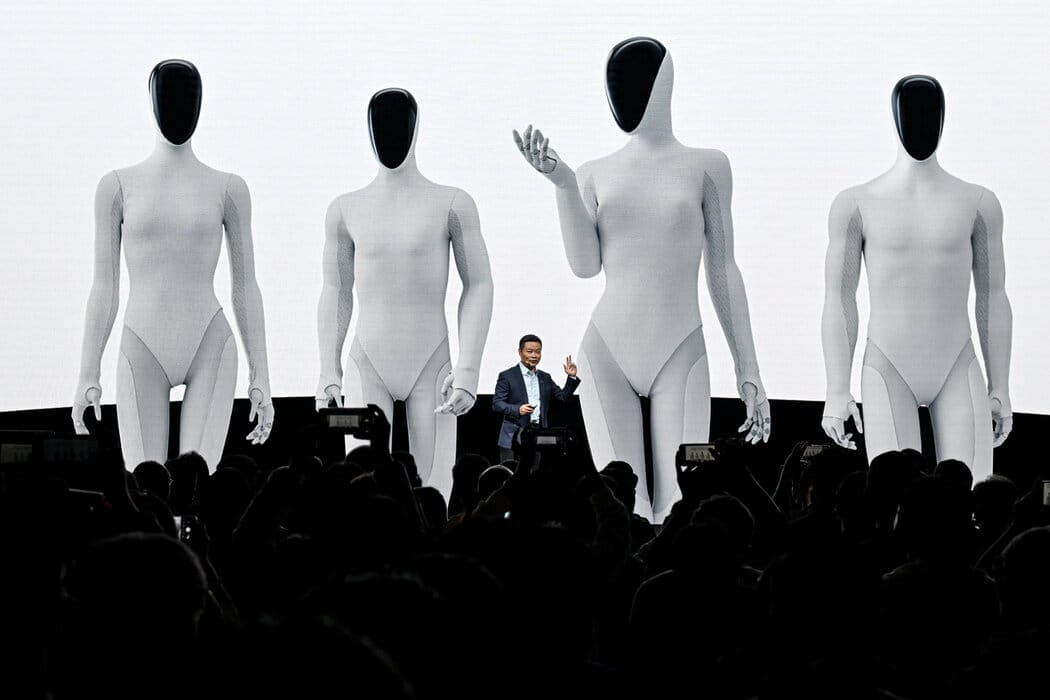
Robots made by Chinese start-ups have danced on television, staged boxing matches and run marathons. When one company debuted its most recent robot last month, people online in China thought it looked so much like a human that workers cut the robot’s leg open onstage to reveal its metal pistons.
中国初创企业研发的机器人已登上电视跳舞、登台打拳击,还跑马拉松。某公司上月推出最新机器人时,中国网友认为外观太像真人,现场工作人员只得当众剖开机器人腿部,展示其内部金属活塞结构。
Despite the public fascination, concerns are growing that China’s robotics industry is moving too fast. The robots can mimic human movement and even complete basic tasks. But they are not skilled enough to handle many tasks now done by people. And with so many companies rushing into the industry, Beijing is warning of a bubble.
尽管这类机器人引发了公众的广泛关注,外界对中国机器人产业发展过快的担忧也在不断加剧。目前这些机器人虽能模仿人类动作,甚至完成一些基础任务,却尚未熟练掌握人类当下承担的诸多工作技能。面对大批企业争相涌入的现状,中国政府已发出行业泡沫预警。
Over 150 manufacturers are vying for a piece of the market, the Chinese government said last month, warning that the industry was at risk for a crowd of “highly repetitive products.”
北京上月指出,国内已有超过150家制造商竞逐机器人市场,并警示称,该行业正面临“产品同质化严重”的风险。
“China has an attack-first approach when it comes to the adoption of new technology,” said Lian Jye Su, a chief analyst at Omdia, a tech research firm. “But this generally leads to a large number of vendors fighting for small chunks of market.”
“在新技术应用方面,中国向来采取先发制人的策略,”科技研究机构Omdia首席分析师苏连杰表示。“但这种模式通常会导致大量厂商瓜分有限的市场份额。”
As it did with electric vehicles, China has gained an early global lead in making robots. China is using more robots in factories than the rest of the world combined, moving farther ahead of Japan, the United States, South Korea and Germany. Robots have transformed Chinese factory lines, doing things like welding car parts and lifting boxes onto conveyor belts.
如同在电动汽车领域的发展路径,中国在机器人制造领域也已率先抢占全球领先地位。中国工厂的工业机器人使用量,已超过世界其他国家的总和,将日本、美国、韩国和德国远远甩在身后。机器人已然改变了中国工厂的生产线运作模式,承担起焊接汽车零部件、将箱子搬上传送带等一系列工作。
It’s not unusual to run into a robot in Beijing. Robotic machines deliver room service in hotels and buff the floors in airports. Four-legged robots help deliver packages on university campuses. Robots cooked and served food in canteens during the 2022 Winter Olympics.
在北京,偶遇机器人早已不是新鲜事:酒店里,机器人负责送客房服务;机场里有机器人承担拖地工作;大学校园里,四足机器人帮忙配送包裹;2022年冬奥会期间,食堂里有机器人负责烹饪和上菜。
But China is also working on the next frontier of robotics: robots that not only look but think and act like people. Public and private investors spent over $5 billion this year on start-ups making humanoid robots — the same amount spent in the last five years combined.
与此同时,中国正致力于攻克机器人领域的下一个前沿课题——研发不仅外形酷似人类,更能像人类一样思考、行动的机器人。今年以来,公共与私人投资者已向人形机器人初创企业投入超50亿美元,这一数额相当于过去五年的投资总和。
Chinese robot makers have significant advantages. They are able to draw on the world’s strongest manufacturing sector and the backing of multiple levels of government. They are getting better at making parts like the motors and specialized screws in robot joints.
中国机器人制造商具备诸多显著优势,他们能依托全球最完备的制造业体系,再加上各级政府的支持,企业在电机、机器人关节专用螺丝等零部件制造等技术方面正持续精进。
 今年,中国多家公共和私营企业纷纷向机器人初创企业投入资金。政府宣称该行业将助力推动中国经济增长。
 8月,宇树及其他初创企业制造的人形机器人在北京参加了一场仅限机器人的体育赛事。
 一些中国创始人与投资者坚信,人形机器人可能是人工智能在现实世界中形成实体力量的途径。
What Chinese robot start-ups have not been able to do is make humanoid robots that could transform the economy.
然而,中国机器人初创企业至今未能实现的目标是打造出足以推动经济变革的人形机器人。
Experts say the humanoid robots that have been released so far struggle with unpredictable situations. They can be programmed to follow patterns, but they have a hard time reacting to events as they happen.
专家表示,目前已推出的人形机器人难以应对各类突发状况。它们可以按照预设程序完成重复性动作,却很难对实时发生的事件做出灵活反应。
Chinese companies are realizing that making robots is not enough, said P.K. Tseng, a research manager at TrendForce, a market research firm in Taipei, Taiwan. “Without use cases, even if they can ship the products, they don’t know where to sell them,” he said.
“中国企业逐渐意识到,光造出机器人还远远不够,”台湾市场研究机构集邦科技研究经理曾伯楷指出。“如果没有具体的应用场景,就算产品能生产出来,企业也不知道该卖给谁。”
Company founders and investors believe that artificial intelligence will be the answer and that humanoid robots could be how A.I. becomes a physical force in the world.
企业创始人和投资者坚信,人工智能将是破局的关键,而人形机器人有望成为人工智能在现实世界中发挥实际作用的载体。
In Silicon Valley, tech executives often talk about achieving what they call artificial general intelligence. There is no settled definition, but for many it is the idea that A.I. could match the powers of the human mind.
在硅谷,科技高管们常常提及实现“通用人工智能”的目标。这一概念目前尚无统一定论,但在很多人看来,通用人工智能指的是具备与人类大脑同等能力的人工智能。
In China, robotics companies claim they will make A.G.I. a reality.
在中国,机器人企业纷纷宣称将率先让通用人工智能成为现实。
“For people in China, A.G.I. should be something that benefits people in their everyday life,” said Sunny Cheung, a fellow at the Jamestown Foundation, which studies Chinese government influence. “Robotics is a testament of applied A.I. in real life.”
“对于中国人而言,通用人工智能理应是一种能切实惠及人们日常生活的技术,”研究中国政府影响力的机构詹姆斯敦基金会研究员桑尼·张(音)表示,“机器人技术正是人工智能在现实生活中落地应用的绝佳例证。”
But there is a big gap between this vision and the current abilities of robots. Many Chinese robotics start-ups are working on software they hope will transform robot behavior the way large language models have transformed A.I.
但这一愿景与当前机器人能力存在巨大鸿沟。许多中国机器人初创企业正着力研发相关软件,希望能像大型语言模型颠覆人工智能领域那样,彻底改变机器人的行为模式。
One way that robots can learn to act more like people is by repetitively doing basic tasks. For example, a limited number of robots made by UBTech Robotics, which is based in Shenzhen like dozens of other start-ups, have been lifting boxes over and over again at electric vehicle factories.
机器人要学会更贴近人类的行为方式,一种途径是通过反复执行基础任务积累经验。例如,与众多同行一样扎根深圳的优必选科技已在部分电动汽车工厂部署少量机器人,让它们反复练习搬箱子的动作。
Another way to train robots is by simulation, in which they watch a lot of videos of the thing they will do. Many of China’s leading robotics start-ups use software and chips made by the Silicon Valley company Nvidia to run their robots’ simulation training, Mr. Cheung said.
另一种训练方式是模拟教学,即让机器人观看大量相关任务的视频。桑尼·张称,中国多家头部机器人初创企业均采用美国硅谷企业英伟达研发的软件和芯片,开展机器人的模拟训练工作。
 在7月于上海举行的世界人工智能大会上,与会者得以与松延动力公司一款具有逼真特征的人形机器人进行互动。
 宇树科技宣布了上市计划,这可能帮助它成为中国领先的人形机器人制造商。
 展会上的机器人零部件。中国机器人制造商在批量生产方面日益精进,使企业相较于外国竞争对手更具优势。
While no one is certain how useful humanoid robots will turn out to be, China has already put two million manufacturing robots to use. Factories in China installed nearly 300,000 new robots last year, while American factories installed 34,000.
尽管人形机器人未来的实用价值尚无定论,但中国目前已投入使用200万台工业机器人。去年,中国工厂新增工业机器人安装量近30万台,而美国工厂的安装量仅为3.4万台。
Chinese factories have also gotten better at making robots, a major advantage over foreign firms that struggle to manufacture them in large numbers.
中国工厂在机器人生产制造方面的能力也日益提升,使其相较于难以实现大规模生产的外国企业具备显著优势。
The start-up Unitree Robotics has announced plans to do an initial public offering, which could provide the capital it needs to help it become China’s leading humanoid robotics maker. Its latest basic humanoid robots are priced at about $6,000 in China, a fraction of the price of robots made by Boston Dynamics, long the leading American player in the industry. Boston Dynamics was acquired by the South Korean giant Hyundai Motor in 2020.
初创企业宇树科技已宣布计划启动首次公开募股,此次上市有望为其募集足够资金,助力其成为中国首屈一指的人形机器人制造商。该公司最新推出的基础款人形机器人,在中国市场的售价约为4.2万元,仅为长期领跑美国机器人行业的波士顿动力公司同类产品售价的一个零头。波士顿动力于2020年被韩国巨头现代汽车收购。
Major A.I. research labs, universities and start-ups in the United States have bought Unitree robots in recent months to test the robots’ abilities and interactions with their software.
近几个月来,美国多家顶尖人工智能研究实验室、高校以及初创企业纷纷采购宇树科技的机器人,用于测试其性能以及与自研软件的适配性。
Chinese robot makers can offer lower prices in part because they are getting a lot of funding from municipal governments and state-backed hedge funds. The Beijing government has started a $14 billion fund to invest in A.I. and robotics. Shanghai set up an embodied A.I. fund with an initial investment of about $77 million.
中国机器人制造商之所以能给出更低的售价,部分原因在于它们能获得大量来自地方政府和国有对冲基金的资金支持。北京市政府已设立规模达140亿美元的基金,专门用于人工智能和机器人领域的投资;上海市也成立了一支具身智能专项基金,初始投资额约为7700万美元。
 机器人学习更接近人类行动的一种方式就是反复执行基础任务。
 宇树机器人的价格仅为波士顿动力公司所产机器人的一个零头。
 优必选公司于2019年进行的演示。
In Hangzhou, a tech hot spot, Unitree and a rival, Deep Robotics, are part of a group of A.I. and robotics start-ups that the Chinese media has crowned the “six dragons.” The A.I. start-up DeepSeek is another.
在科技热点城市杭州,宇树科技与其竞争对手云深处科技同属被中国媒体誉为“六小龙”的人工智能与机器人初创企业阵营,人工智能企业深度求索也位列其中。
This month, Deep Robotics said it had raised $70 million in its latest funding round.
本月,云深处科技宣布在最新一轮融资中募集到7000万美元资金。
The humanoid robot maker Robotera said in November that it had raised more than $140 million from investors, including the venture capital arm of Geely, an electric carmaker, and the Beijing city government’s dedicated investment funds for robotics and artificial intelligence.
人形机器人制造商星动纪元则于11月表示,已从投资者处筹集超1.4亿美元资金,投资方包括电动汽车制造商吉利集团的风险投资部门,以及北京市政府专门设立的机器人与人工智能投资基金。
In late November, the Chinese central government set up a committee to establish industry standards. Members included founders, university research labs, municipal government hedge funds and Chinese state officials working on cryptography.
11月下旬,中国中央政府成立专项委员会,负责制定机器人行业标准。委员会成员涵盖企业创始人、高校研究实验室代表、地方政府对冲基金负责人,以及从事密码学研究的中国政府官员。